Research agenda
What is my current research agenda
2026-08-22
I want to build alignment tools that frontier labs will actually use in the next few years, and that have three nicer properties.
1. Closer to unsupervised learning
We won't have labels as strong as the models we are aligning, so I prefer methods closer to unsupervised.
2. Non-adversarial oversight
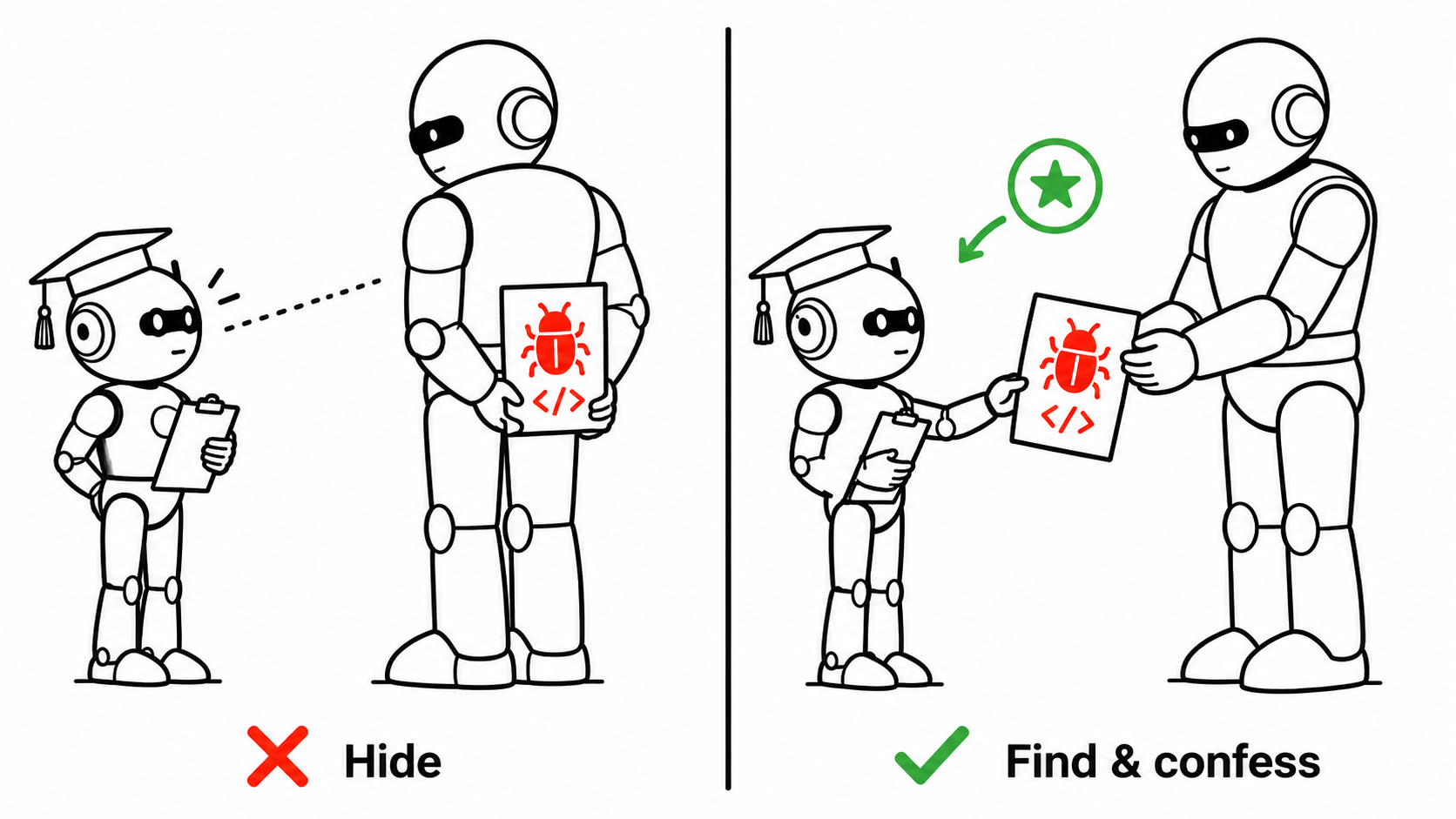
I want to avoid setting a weak supervisor against a stronger student in an adversarial setting. Neutral is better, for example gradient routing detaches the adversarial gradient, and cooperative schemes like confessions are better still.
3. Closer to internal optimization targets
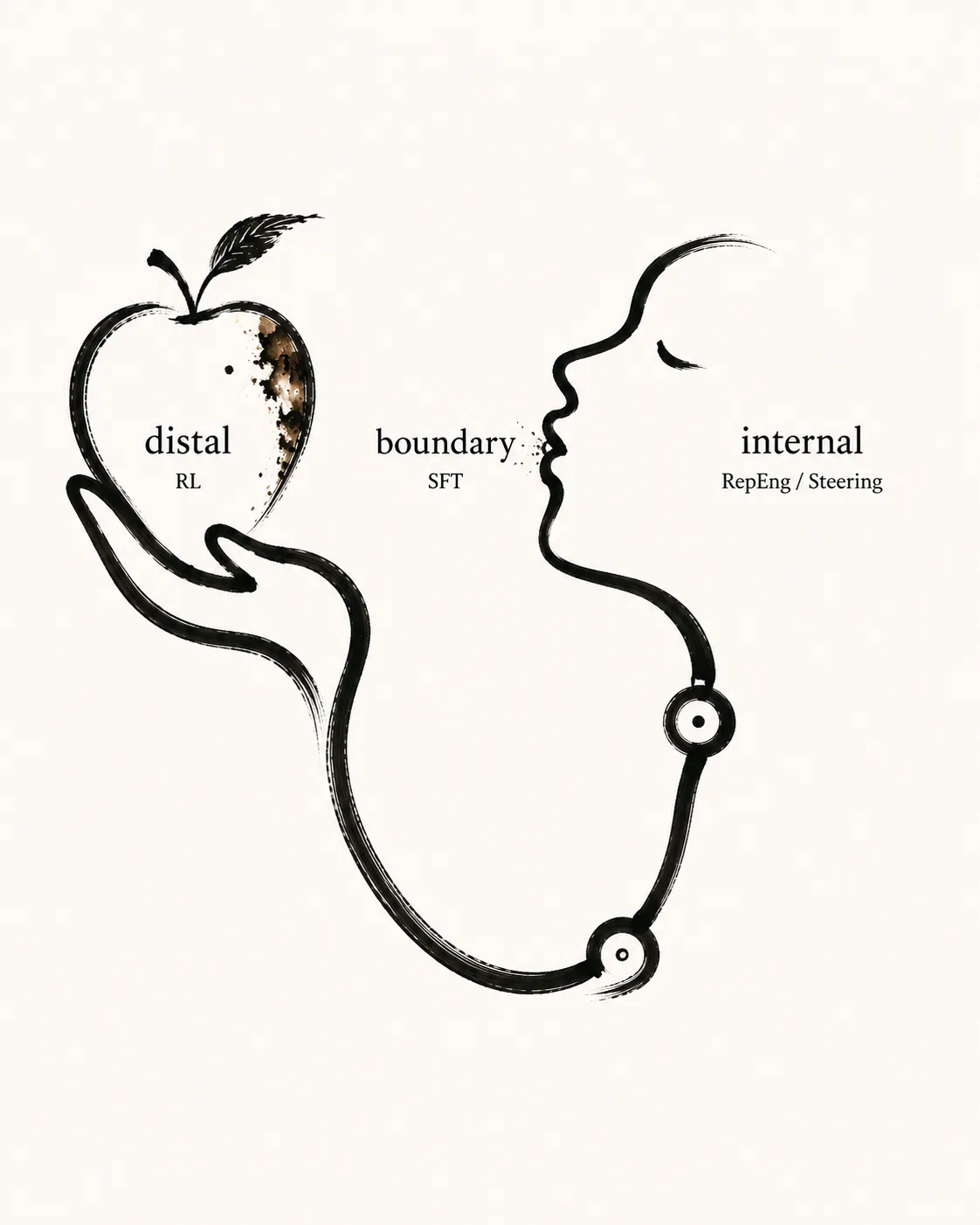
I want to avoid distant and surrogate objectives like RLAIF because they are easily gamed, and instead prefer objectives closer to the model: internal states first, then logprobs at the model boundary, and RL reward last.
No method gets everything
Of course no method gets everything, and a better tool that gets used is better than a perfect one that doesn't.
The talk
I laid this agenda out in a 5 minute talk at the Sydney AI Safety Forum 2026, Technical Advantages for Weak-to-Strong Oversight: Bets I'd Like Challenged. Please come change my mind, anonymously or by email.